Every day is Earth Day for this one.
Showing posts with label Pennsylvania. Show all posts
Showing posts with label Pennsylvania. Show all posts
20.4.12

In Praise of Wilderness
Rather than an extended blog about wilderness for Earth Day and Earth Week, I'd rather share the words on nature and the wild by people far more eloquent than I am and share some pictures of our beautiful area. At the end, you'll get why Cathy Pedler of the Allegheny Defense Project is on our show today.
 "The West of which I speak is but another name for the Wild, and what I have been preparing to say is, that in Wildness is the preservation of the World."
~Henry David Thoreau
“Wilderness is not a luxury but a necessity of the human spirit, and as vital to our lives as water and good bread. A civilization which destroys what little remains of the wild, the spare, the original, is cutting itself off from its origins and betraying the principle of civilization itself.”
~Edward Abbey
 "Those who contemplate the beauty of the earth find reserves of strength that will endure as long as life lasts. There is symbolic as well as actual beauty in the migration of the birds, the ebb and flow of the tides, the folded bud ready for the spring. There is something infinitely healing in the repeated refrains of nature - the assurance that dawn comes after night, and spring after the winter."
~Rachel Carson
"For unnumbered centuries of human history the wilderness has given way. The priority of industry has become dogma. Are we as yet sufficiently enlightened to realize that we must now challenge that dogma, or do without our wilderness? Do we realize that industry, which has been our good servant, might make a poor master?"
~Aldo Leopold

"We need to realize that, first, we don’t give rights to nature. Nature has rights. And more often than not, nature’s rights and people’s rights are allied as one in most places of the world, where, in places like Jaitapur, people are saying, 'This land is our mother.' This is not an esoteric idea. It’s the most relevant, potent, democratic idea of our times.”
~Vandana Shiva
"Reading about nature is fine, but if a person walks
in the woods and listens carefully, he can learn more than what is in
books, for they speak with the voice of God."
~George Washington Carver
 We'll be joined by Cathy Pedler who's been active in the Allegheny Defense Project (ADP) since 2003. She's worked as an archaeological researcher and a sustainability coordinator and is an avid outdoors person. She will be telling us about the Heartwood Forest Council and the ADP's work past, present, and future to protect the forests and wilds of the Allegheny plateau and the Allegheny National Forest, Pennsylvania's only national forest.
13.4.12
PennEnvironment & Commonwealth Foundation Talk Fracking on NBC
If you are interested in the so-called medical gag order, watch from about 9:45 on.
Conservation and Sustainability from the Legislature: Conversation with Sen. Jake Corman
Pennsylvania has a complicated history regarding natural resource use. On the one hand, we have these incredible state park systems, forests, and game lands. But then we have the legacies of timbering, iron and steel, strip mines, and now the looming rush into shale gas. How has and is the legislature dealing with these issues? [See below.]
Over the last few decades, programs like Growing Greener have been helpin g us preserve our open and green spaces. The program has been very popular among a large segment of Pennsylvanians, but funding has been on the chopping block. And hearkening back to last week's show with Mike Hermann of Purple Lizard Maps and Frank Maguire of the International Mountain Bike Association, there's a lot of concern that Governor Tom Corbett is going to undercut the integrity of state forests and state parks by further opening them to gas drilling.
At the community level, people in the borough of State College overwhelmingly voted for a Community and Environmental Bill of Rights and a Fracking Ban in November. It was a landslide 72% "yays" to 28% "nays." But the recently passed Act 13 of the Oil and Gas Act might undercut home rule and the referendum State College passed. And pretty clearly, there are a lot of rumblings about shale gas development in the Marcellus Shale. Will Pennsylvania end up in another boom and bust like we did with oil and coal?
Our first guest on today's show, Senator Jake Corman (R - 34th district) grew up in Central Pennsylvania. His father was a senator before him and was my first acquaintance with a state politician. Jake Corman was elected in 1998 and is currently serving his fourth term. He chairs the Appropriations Committee and sits on several other committees. Because he sits at the helm of the Appropriations Committee, he has an intimate understanding of how the budget works whether that's money going into Going Greener or being dispersed from Act 13.
Call in with questions this afternoon from 4-5 pm: (814) 865-9577. You can also join us on Facebook and Twitter as well.
UPDATE: Senator Corman's office called this morning to inform us that a schedule change prevents him from coming on the show.
Over the last few decades, programs like Growing Greener have been helpin
 g us preserve our open and green spaces. The program has been very popular among a large segment of Pennsylvanians, but funding has been on the chopping block. And hearkening back to last week's show with Mike Hermann of Purple Lizard Maps and Frank Maguire of the International Mountain Bike Association, there's a lot of concern that Governor Tom Corbett is going to undercut the integrity of state forests and state parks by further opening them to gas drilling.
At the community level, people in the borough of State College overwhelmingly voted for a Community and Environmental Bill of Rights and a Fracking Ban in November. It was a landslide 72% "yays" to 28% "nays." But the recently passed Act 13 of the Oil and Gas Act might undercut home rule and the referendum State College passed. And pretty clearly, there are a lot of rumblings about shale gas development in the Marcellus Shale. Will Pennsylvania end up in another boom and bust like we did with oil and coal?
Our first guest on today's show, Senator Jake Corman (R - 34th district) grew up in Central Pennsylvania. His father was a senator before him and was my first acquaintance with a state politician. Jake Corman was elected in 1998 and is currently serving his fourth term. He chairs the Appropriations Committee and sits on several other committees. Because he sits at the helm of the Appropriations Committee, he has an intimate understanding of how the budget works whether that's money going into Going Greener or being dispersed from Act 13.
Call in with questions this afternoon from 4-5 pm: (814) 865-9577. You can also join us on Facebook and Twitter as well.
UPDATE: Senator Corman's office called this morning to inform us that a schedule change prevents him from coming on the show.
6.4.12
Playing in Penn's Woods with a Purple Lizard
I grew up playing in the woods. Behind my house there was a patch of woods where we played hide and seek. Down the lane to the Schwab's house my friends and I climbed trees and had our "monkey club." Up the mountain, way up Deepwood Drive, were the trails and sledding runs for the winter. Those were at the edge of the Rothrock State Forest - 90,000 acres of wonder.
As a teenager, I found another part of Rothrock in the Shingletown Gap. It's an amazing world of hemlocks and white pines, rhodedendron, huge tumbles of scree, and a riot of blooming mountain laurel in late May and June surrounding Roaring Run. Two and a half miles up the trail you come to a fire circle by Sand Spring, Roaring Run's headwaters.
Deep in Rothrock rests Alan Seeger Natural Area, a place as close to primeval as you can get in Pennsylvania. According to DCNR, "This 390-acre area along Standing Stone Creek includes virgin white pine and hemlock. Towering above the trail as it winds through 20-foot-high rhododendrons is a hemlock forest bypassed by the loggers at the end of the 19th century. Here are magnificent trees, many over 4 feet diameter at breast height and reaching several hundred years old. Scientists believe the largest tree in the area could be over 1,000 years old, possibly the oldest in the state, some on small islands in the middle of Stone Creek." It is a magical place. In fact, Rothrock is home to a lot of magical places.
There are few people alive who know these places in Rothrock - and many others as we will hear - as Mike Hermann do and Frank Maguire do. Frank's the regional director of the International Mountain Bike Association. Mike is the cartographer and owner of Purple Lizard Maps. He's made trail maps of Rothrock State Forest and the Raystown Lake so that people can go on adventures in our area. Whether you want to do a short hike, a day hike, camp in a wild, go to a vista, chart your way across some of the Mid-State Trail, or better yet, take an amazing mountain bike epic ride from Whipple Dam to Cooper's Gap via Greenwood Furnace and then back again...you can find your way with these maps.
And what's the purple lizard about anyway?
Mike will join us today at 4 pm on The Lion 90.7 fm to talk about the woods, their past and future, and of course playing in the woods. He has some upcoming projects we'll learn about too. As always, tune in to the live feed online and call in: (814) 865-9577. Remember you can join us on Facebook and on Twitter too.
As a teenager, I found another part of Rothrock in the Shingletown Gap. It's an amazing world of hemlocks and white pines, rhodedendron, huge tumbles of scree, and a riot of blooming mountain laurel in late May and June surrounding Roaring Run. Two and a half miles up the trail you come to a fire circle by Sand Spring, Roaring Run's headwaters.
Deep in Rothrock rests Alan Seeger Natural Area, a place as close to primeval as you can get in Pennsylvania. According to DCNR, "This 390-acre area along Standing Stone Creek includes virgin white pine and hemlock. Towering above the trail as it winds through 20-foot-high
 rhododendrons is a hemlock forest bypassed by the loggers at the end of the 19th century. Here are magnificent trees, many over 4 feet diameter at breast height and reaching several hundred years old. Scientists believe the largest tree in the area could be over 1,000 years old, possibly the oldest in the state, some on small islands in the middle of Stone Creek." It is a magical place. In fact, Rothrock is home to a lot of magical places.
There are few people alive who know these places in Rothrock - and many others as we will hear - as Mike Hermann do and Frank Maguire do. Frank's the regional director of the International Mountain Bike Association. Mike is the cartographer and owner of Purple Lizard Maps. He's made trail maps of Rothrock State Forest and the Raystown Lake so that people can go on adventures in our area. Whether you want to do a short hike, a day hike, camp in a wild, go to a vista, chart your way across some of the Mid-State Trail, or better yet, take an amazing mountain bike epic ride from Whipple Dam to Cooper's Gap via Greenwood Furnace and then back again...you can find your way with these maps.
And what's the purple lizard about anyway?
Mike will join us today at 4 pm on The Lion 90.7 fm to talk about the woods, their past and future, and of course playing in the woods. He has some upcoming projects we'll learn about too. As always, tune in to the live feed online and call in: (814) 865-9577. Remember you can join us on Facebook and on Twitter too.
2.3.12
Searching beneath our feet, working with our hands, and moving from the heart.
Do you ever wonder why lawns sit empty? Have you looked at your neighbors' yards or pieces of the park and thought, "What else could be there?"
I know I often think about what it would be like to see stands of maples, oaks, walnuts, and cherry trees where sprawling lawns sit. And other times I envision lawns surrounded by wildflower meadows where bees and butterflies dance. Or I see beds of rich loam with intermingled vegetables in rows arranged in beautiful arrangements with compost chambers, piles of leaves, and jumbled pile of hand tools.
Do you wonder what it would be like to be invited into that place if it isn't your property? Or what if the people who owned the garden asked you to eat some produce by just putting out there for you? Or what if you wanted to do it with your own lawn but weren't sure where to begin? Maybe all you want is a beautiful place that nurtures your spirit and gives you peace of mind and, you hope, a smile to others. A food commons. A beauty commons. A peaceful commons.
Today's guests are taking some of those ideas and feelings and bringing them to life. Dana Stuchul started something she calls Veggie Commons, "is to join together (as kids, teens, beginning farmers and gardeners, dwellers, and elders) in the cultivation, harvest, and enjoyment of wholesome, locally nurtured food. Utilyzing food, labor, land, and love, we endeavor to fortify our community, transforming lawnscapes into foodscapes." [Garden pictured at right.] Dana, like our previous guests Asher Miller of the Post Carbon Institute, Katherine Watt of Spring Creek Homesteading and formerly of the Transition Town Initiative, is something of radical re-localizer. There is great promise in meaningful work with the land, something our mechanized and digitized society has lost but can regain through work in the commons.
 And maybe you want to take a crack at creating your beautiful space but aren't sure where to begin. Woody Wilson has started Home Grown Farms (Facebook page here), a company that designs, installs, and manages residential and company gardens in State College. Wilson says, "Home Grown Farms bridges the gap between where food is grown and where people consume it."
Both are grounded (pardon the pun) in a love of our place, love of the land, and the possibility of local resilience. Rather than fret and kvetch about sprawl, climate change, peak oil, and the destructive nature of our stuffing and starving food system, they have gotten their hands dirty. Quite literally, this is labor of love and labor for love.
Dana posted the words of Ivan Illich on the Veggie Commons blog a few days ago. He said,
So join us today on the Lion 90.7 fm. As always, feel free to call in (814) 895-9577 with comments and questions. You can also find us on Facebook where you can post articles and interact with other SN listeners and readers or join us on Twitter at SustainNowRadio.
I know I often think about what it would be like to see stands of maples, oaks, walnuts, and cherry trees where sprawling lawns sit. And other times I envision lawns surrounded by wildflower meadows where bees and butterflies dance. Or I see beds of rich loam with intermingled vegetables in rows arranged in beautiful arrangements with compost chambers, piles of leaves, and jumbled pile of hand tools.
Do you wonder what it would be like to be invited into that place if it isn't your property? Or what if the people who owned the garden asked you to eat some produce by just putting out there for you? Or what if you wanted to do it with your own lawn but weren't sure where to begin? Maybe all you want is a beautiful place that nurtures your spirit and gives you peace of mind and, you hope, a smile to others. A food commons. A beauty commons. A peaceful commons.
Today's guests are taking some of those ideas and feelings and bringing them to life. Dana Stuchul started something she
 calls Veggie Commons, "is to join together (as kids, teens, beginning farmers and gardeners, dwellers, and elders) in the cultivation, harvest, and enjoyment of wholesome, locally nurtured food. Utilyzing food, labor, land, and love, we endeavor to fortify our community, transforming lawnscapes into foodscapes." [Garden pictured at right.] Dana, like our previous guests Asher Miller of the Post Carbon Institute, Katherine Watt of Spring Creek Homesteading and formerly of the Transition Town Initiative, is something of radical re-localizer. There is great promise in meaningful work with the land, something our mechanized and digitized society has lost but can regain through work in the commons.
 And maybe you want to take a crack at creating your beautiful space but aren't sure where to begin. Woody Wilson has started Home Grown Farms (Facebook page here), a company that designs, installs, and manages residential and company gardens in State College. Wilson says, "Home Grown Farms bridges the gap between where food is grown and where people consume it."
Both are grounded (pardon the pun) in a love of our place, love of the land, and the possibility of local resilience. Rather than fret and kvetch about sprawl, climate change, peak oil, and the destructive nature of our stuffing and starving food system, they have gotten their hands dirty. Quite literally, this is labor of love and labor for love.
Dana posted the words of Ivan Illich on the Veggie Commons blog a few days ago. He said,
As philosophers, we search below our feet because our generation has lost its grounding in both soil and virtue. By virtue, we mean that shape, order and direction of action informed by tradition, bounded by place, and qualified by choices made within the habitual reach of the actor; we mean practice mutually recognized as being good within a shared local culture that enhances the memories of a place.What is happening here with Dana and Woody? What if more of us recognized and nurtured our relationship with the soil to which all terrestrial life owes its existence?
So join us today on the Lion 90.7 fm. As always, feel free to call in (814) 895-9577 with comments and questions. You can also find us on Facebook where you can post articles and interact with other SN listeners and readers or join us on Twitter at SustainNowRadio.
16.2.12
My Farmer
I was sort of born into the local food movement. Not in a huge way. But sort of. Enough that when the local food movement started to flourish again a few years ago it was a natural fit. And I knew when I had found my farmer, John Eisenstein of Jade Family Farm. It was the carrots.
When I was a kid, we were part of a local food co-op. My mom tells this story of how at about two and a half I picked up a carton of eggs and methodically dropped the eggs one by one on the floor. As a father now, I recognize the classic moment. It was probably great and dreadful at the same time.
We had a big garden in our backyard. A strawberry patch, cucumbers galore that went into salad and became pickles, tomatoes fresh and some canned into sauce, green beans, raspberries along the back fence, and squash I couldn't stand if my 6-year-old memory serves at all.
At the garden's edge by the low stone wall behind the back porch was our big two-chamber compost. It was a classic railroad tie design. How many pounds of coffee grounds and grapefruit rinds went in there? My dad, bandanna wrapped around his head, turned it with the spade.
My best friend Elliott's family two houses down had a comparable garden. His mother was a canning machine and she made so many pickles, jams, and sauces all summer long. Emma's pickles were the ultimate. They are the apotheosis of pickles, the ideal pickles that the denizens of Plato's cave can only dream about.
As a boy I had to weed. I liked it as much as most 6-year-olds do which is to say not really at all. I'd have rather been climbing trees and riding bikes. My sister hated it more than I did. Sometimes we got out of doing it. Sometimes not. But it was great to have fresh fruit and veggies.
My mom is one of twelve children from a New York farm family. Every summer and Christmas we traveled to "the farm" to stay with my uncle and grandmother. I played in the barn with the cats, pet the cows, and climbed in the rafters of the hay mow. It was great. As a youngster I got to steer the tractor in the high fields on my uncle's lap. Even as a punk-ass teenager more interested in Slayer, skateboards, and the girls who tortured my very existence (you remember them forever right?) than the farm's operations, I still loved it. During summer visits I wandered the 100 acres alone or with a visiting cousin.
And then I went to college. I think it nearly totally separated me from food and nature. I'd occasionally go to the friday farmer's market. The summer peaches and blueberries were about all I cared about. I think I got my girlfriend Emily sunflowers and wildflowers a couple of times.
But it wasn't until my wife and I joined a small community supported agriculture group with Reeger's Farm Market when we lived in Indiana, Pennsylvania that we started getting back to local food. When we came back to State College and I started my Ph.D. program, we were ready for something more. That's the year Michael Pollan's The Omnivore's Dilemma and Barbara Kingsolver's Animal, Vegetable, Miracle came out. In a class I took we read Kingsolver, Francis Moore Lappe's Diet for a Small Planet, some essays by Wendell Berry, and Eric Schlosser's rather terrifying Fast Food Nation. I wrote some stories for Voices of Central Pennsylvania on local food and farmers, started a club for future teachers who wanted to embed ecological literacy and sustainability into their education, attended a PASA conference, and worked with Mike to launch this show. Our moniker, courtesy of Mike, has been, "We believe sustainability is best when it's fresh and local."
For two and a half years on the air I've brought up my farmer, John Eisenstein and his family's farm, Jade Family Farm. I call him my farmer (that's his hand, shirt, and jeans on the right) because from May to October we get most of our produce from Jade through our share of the farm. Why did he become my farmer? The carrots. It was very simple. I'd never had a carrot like that before. If I try to describe the taste I will mangle the flavor profile so I will just say that it's about as close to heaven as I think occurs from vegetable consumption. Maybe you know what I mean. The scent of soil is still on it and the sugars and the bitterness pop. See...I mangled it. Just try some Jade carrots and you'll get it.
Tomorrow, we'll have John on the show. He's a sort of romantic prone to making jokes, not serious and serious. We'll talk about his experiences as a farmer and how he's gotten there. As someone with a bit of familial history with sustainability pedigree, he'll have some good things to share we're sure. Carrots are out I suppose so we aren't likely to be crunching on the air.
As always, listen in on The Lion 90.7 fm from 4-5 pm and feel free to call in with questions or comments.
When I was a kid, we were part of a local food co-op. My mom tells this story of how at about two and a half I picked up a carton of eggs and methodically dropped the eggs one by one on the floor. As a father now, I recognize the classic moment. It was probably great and dreadful at the same time.
We had a big garden in our backyard. A strawberry patch, cucumbers galore that went into salad and became pickles, tomatoes fresh and some canned into sauce, green beans, raspberries along the back fence, and squash I couldn't stand if my 6-year-old memory serves at all.
At the garden's edge by the low stone wall behind the back porch was our big two-chamber compost. It was a classic railroad tie design. How many pounds of coffee grounds and grapefruit rinds went in there? My dad, bandanna wrapped around his head, turned it with the spade.
My best friend Elliott's family two houses down had a comparable garden. His mother was a canning machine and she made so many pickles, jams, and sauces all summer long. Emma's pickles were the ultimate. They are the apotheosis of pickles, the ideal pickles that the denizens of Plato's cave can only dream about.
As a boy I had to weed. I liked it as much as most 6-year-olds do which is to say not really at all. I'd have rather been climbing trees and riding bikes. My sister hated it more than I did. Sometimes we got out of doing it. Sometimes not. But it was great to have fresh fruit and veggies.
My mom is one of twelve children from a New York farm family. Every summer and Christmas we traveled to "the farm" to stay with my uncle and grandmother. I played in the barn with the cats, pet the cows, and climbed in the rafters of the hay mow. It was great. As a youngster I got to steer the tractor in the high fields on my uncle's lap. Even as a punk-ass teenager more interested in Slayer, skateboards, and the girls who tortured my very existence (you remember them forever right?) than the farm's operations, I still loved it. During summer visits I wandered the 100 acres alone or with a visiting cousin.
And then I went to college. I think it nearly totally separated me from food and nature. I'd occasionally go to the friday farmer's market. The summer peaches and blueberries were about all I cared about. I think I got my girlfriend Emily sunflowers and wildflowers a couple of times.
But it wasn't until my wife and I joined a small community supported agriculture group with Reeger's Farm Market when we lived in Indiana, Pennsylvania that we started getting back to local food. When we came back to State College and I started my Ph.D. program, we were ready for something more. That's the year Michael Pollan's The Omnivore's Dilemma and Barbara Kingsolver's Animal, Vegetable, Miracle came out. In a class I took we read Kingsolver, Francis Moore Lappe's Diet for a Small Planet, some essays by Wendell Berry, and Eric Schlosser's rather terrifying Fast Food Nation. I wrote some stories for Voices of Central Pennsylvania on local food and farmers, started a club for future teachers who wanted to embed ecological literacy and sustainability into their education, attended a PASA conference, and worked with Mike to launch this show. Our moniker, courtesy of Mike, has been, "We believe sustainability is best when it's fresh and local."
For two and a half years on the air I've brought up my farmer, John Eisenstein and his family's farm, Jade
 Family Farm. I call him my farmer (that's his hand, shirt, and jeans on the right) because from May to October we get most of our produce from Jade through our share of the farm. Why did he become my farmer? The carrots. It was very simple. I'd never had a carrot like that before. If I try to describe the taste I will mangle the flavor profile so I will just say that it's about as close to heaven as I think occurs from vegetable consumption. Maybe you know what I mean. The scent of soil is still on it and the sugars and the bitterness pop. See...I mangled it. Just try some Jade carrots and you'll get it.
Tomorrow, we'll have John on the show. He's a sort of romantic prone to making jokes, not serious and serious. We'll talk about his experiences as a farmer and how he's gotten there. As someone with a bit of familial history with sustainability pedigree, he'll have some good things to share we're sure. Carrots are out I suppose so we aren't likely to be crunching on the air.
As always, listen in on The Lion 90.7 fm from 4-5 pm and feel free to call in with questions or comments.
18.1.12
Governor Slashes Science, Sierra Club's Jeff Schmidt Swings Back
State Impact's Scott Detrow reports Gov. Tom Corbett's (R-PA) administration has gutted funding for research on the environmental impacts of Marcellus Shale natural gas development. Despite numerous statements by Corbett, DEP director Mike Krancer, and Lt. Governor Jim Cawley that they make decisions "based on science" or "based on fact," the picture painted here seems to black out the science.
Detrow writes that Department of Conservation and Natural Resources Secretary director Richard Allan has overseen "significant changes" to state scientific research projects examining natural gas drilling and climate change impacts. "Last month, Allan slashed the budget of the agency’s wildlife research program by nearly 70 percent...without consulting the four-person staff responsible for vetting submitted proposals and recommending them for funding." According to the article, DCNR attributes the cuts were caused by declining revenue in the conservation program’s fund. However, DCNR's statement released no criteria for why one program was cut over another.
Under the Rendell administration in 2010, four studies on gas drilling impacts and climate change impacts were funded. This coming year: only one. Despite the endorsement of the Wild Resource Conservation Board to fund two studies on gas, two on climate, and eight others in October. Then the rules abruptly changed, the budget was gutted, seventeen studies were slashed. Only one natural gas study remained.
It appears that political maneuvering played a key role. Detrow reports,
 require deep woods to thrive. As more well pads go in, there is less habitat for the birds. The 8-acre-per-well impact that's often quoted for Marcellus wells has a much larger impact in the forests. Including roads and all of the encroachment factors involved, the total impact can be 31 acres, roughly 1/3 of a kilometer per well. When you multiply that by the hundreds of wells in forests now and the thousands to come, the impacts become enormous. Wildlife is and will suffer.
The Response
The Sierra Club of Pennsylvania's Jeff Schmidt has come out swinging. In a press release today, he is quoted as saying, "Governor Corbett and DEP Secretary Mike Krancer repeatedly say they want sound science to dictate environmental policy in Pennsylvania. However, we have now learned that they are willing to slash funding for necessary scientific research to determine potential environmental harm for which their policies could be responsible. It is clear that the Corbett administration's political goals to promote gas drilling trump their claim to support sound science. In fact, the inconvenient reality is that while gas drilling is ruining drinking water supplies and wildlife habitat, the Corbett administration engages in a cover up of the true impacts."
The press release goes on to cite instances where DEP covered up a Cabot Oil and Gas spill in Lenox, Pennsylvania and ruled the company could cease supplying fresh water to the town of Dimock despite having been found to have polluted the town's water. To compound issues with the directorship of DCNR, earlier this week the Executive Director of the Conservation and Natural Resources Advisory Committee (CNRAC), who provides oversight of DCNR's oil and gas drilling activities on Pennsylvania's public forests and parks, was fired.
"The pattern of the Corbett administration's environmental policies is becoming more apparent every day," Schmidt continued. "We call on the General Assembly to halt the rush to drill in Pennsylvania, and to scrap legislation such as HB 1950, which was written by the Corbett administration. It is time our elected officials represented the people of Pennsylvania, not the out-of-state drillers."
We suspect that in the next 24 hours, the blogosphere will light up with this news as will other environmental organizations like PennFuture, PennEnvironment, and others.
Detrow writes that Department of Conservation and Natural Resources Secretary director Richard Allan has overseen "significant changes" to state scientific research projects examining natural gas drilling and climate change impacts. "Last month, Allan slashed the budget of the agency’s wildlife research program by nearly 70 percent...without consulting the four-person staff responsible for vetting submitted proposals and recommending them for funding." According to the article, DCNR attributes the cuts were caused by declining revenue in the conservation program’s fund. However, DCNR's statement released no criteria for why one program was cut over another.
Under the Rendell administration in 2010, four studies on gas drilling impacts and climate change impacts were funded. This coming year: only one. Despite the endorsement of the Wild Resource Conservation Board to fund two studies on gas, two on climate, and eight others in October. Then the rules abruptly changed, the budget was gutted, seventeen studies were slashed. Only one natural gas study remained.
It appears that political maneuvering played a key role. Detrow reports,
In 2010, nine of the recommended research projects examined the impact of climate change, and four looked at natural gas drilling’s implications. Before the board voted, a staffer representing Hutchinson at the meeting read a statement expressing “deep concern and reservation” about the recommended projects. “In the past the [conservation program] has supported projects that sought to restore a variety of plant and non-game species to their habitats. It seems to me that this theme is not being carried forward,” Hutchinson had written. “Instead, it appears to me, that the committee is being asked to recommend projects for funding that…[are] based upon advancing specific public policy agendas rather than one that is more neutral and scientific based.” Hutchinson said he was referring to the climate change projects.Why does any of this matter? Detrow writes about the threat to scarlet tanager (pictured at right). These migratory songbirds
Patrick Henderson represented Republican Senator Mary Jo White at the meeting. He had a problem with the projects, too. The official minutes, approved by the board during its 2011 meeting, read, “Mr. Henderson expressed concern about natural gas extraction being identified as an environmental impact.” He said, “these projects may not warrant this grant money,” referencing souring budget conditions.
Henderson, of course, went on to become Governor Corbett’s point man on energy and drilling policies. As Energy Executive, Henderson sat on Corbett’s 2011 Marcellus Shale Advisory Commission, and wrote the bulk of its final report.
 require deep woods to thrive. As more well pads go in, there is less habitat for the birds. The 8-acre-per-well impact that's often quoted for Marcellus wells has a much larger impact in the forests. Including roads and all of the encroachment factors involved, the total impact can be 31 acres, roughly 1/3 of a kilometer per well. When you multiply that by the hundreds of wells in forests now and the thousands to come, the impacts become enormous. Wildlife is and will suffer.
The Response
The Sierra Club of Pennsylvania's Jeff Schmidt has come out swinging. In a press release today, he is quoted as saying, "Governor Corbett and DEP Secretary Mike Krancer repeatedly say they want sound science to dictate environmental policy in Pennsylvania. However, we have now learned that they are willing to slash funding for necessary scientific research to determine potential environmental harm for which their policies could be responsible. It is clear that the Corbett administration's political goals to promote gas drilling trump their claim to support sound science. In fact, the inconvenient reality is that while gas drilling is ruining drinking water supplies and wildlife habitat, the Corbett administration engages in a cover up of the true impacts."
The press release goes on to cite instances where DEP covered up a Cabot Oil and Gas spill in Lenox, Pennsylvania and ruled the company could cease supplying fresh water to the town of Dimock despite having been found to have polluted the town's water. To compound issues with the directorship of DCNR, earlier this week the Executive Director of the Conservation and Natural Resources Advisory Committee (CNRAC), who provides oversight of DCNR's oil and gas drilling activities on Pennsylvania's public forests and parks, was fired.
"The pattern of the Corbett administration's environmental policies is becoming more apparent every day," Schmidt continued. "We call on the General Assembly to halt the rush to drill in Pennsylvania, and to scrap legislation such as HB 1950, which was written by the Corbett administration. It is time our elected officials represented the people of Pennsylvania, not the out-of-state drillers."
We suspect that in the next 24 hours, the blogosphere will light up with this news as will other environmental organizations like PennFuture, PennEnvironment, and others.
10.1.12
Clean Air Council attacks Pennsylvania's DEP over Air Quality from Shale Gas Operations
This was just sent out from the Clean Air Council:
As this story carries on, we'll be sure to follow it.
The Inside Story
Pennsylvania SIP Fight Escalates
Posted: January 6, 2012
Pennsylvania's top environmental official is asking EPA to dismiss activists' petition that claims the state is violating its own air quality plan for meeting agency air standards by offering streamlined permits for hydraulic fracturing operations in the state -- claims the state strongly rejects.
The fight over Pennsylvania's state implementation plan (SIP) highlights long-running concerns from environmentalists about emissions from fracking operations in states on the Marcellus Shale. The activist group Clean Air Council's (CAC) challenge to the SIP, which outlines how the state intends to comply with EPA air standards, includes claims that Pennsylvania failed to provide adequate notice and access to information on “minor” source Clean Air Act permits for drilling operations in the state -- permits that activists say are inadequate to control emissions.Michael Krancer, secretary of Pennsylvania's Department of Environmental Protection (DEP), sent a Jan. 5 letter to EPA Administrator Lisa Jackson saying the petition “lacks merit. . . . EPA should promptly dismiss this without any further action.” It adds that the state and EPA “should not be unnecessarily distracted by this contrived and irrational petition from the important and serious work our agencies perform.”
The letter adds that DEP “has expanded the public participation process in appropriate instances to include public meetings and public hearings,” and asserts that it is in full compliance with its latest SIP -- which the state submitted to EPA but which the agency has yet to approve. EPA-approved SIPs outline enforceable air pollution reduction policies and mandates. The 2008 SIP changes include a controversial “streamlined” minor source permit process that has resulted in inadequate permitting of Marcellus Shale drilling sources, CAC charged in its Nov. 28 petition asking EPA to find that Pennsylvania fails to comply with its SIP. The SIP fight comes in the midst of CAC and EPA opposition to a related Pennsylvania DEP drilling guidance that seeks to set a first-time distance threshold for when drilling emissions sources must be combined, or aggregated, for permit purposes, likely expanding the definition of minor sources.
Now CAC is quickly criticizing Krancer's letter to EPA, issuing a Jan. 6 statement that says, “It is clear from the public outcry that a 'streamlined' process is inappropriate for Marcellus Shale 'minor source' permits.” The statement adds that the minor source permit hearing Krancer announced was scheduled only after 60 citizens filed requests. “Citizens should not have to force a public hearing on every compressor station because the notice and access to information is insufficient.”
CAC also points out that because EPA has not approved the SIP changes, the streamlined permit provisions are unlawful. “Further, the revision frustrates the underlying purpose of public notice and comment periods and does not meet Clean Air Act requirements. The council expects that EPA will deny the revision and force Pennsylvania to revoke its 'streamlined' permitting program.”
Jay Duffy, Esq.
Staff Attorney
Clean Air Council
As this story carries on, we'll be sure to follow it.
28.11.11
Marcellus Protest 2011 Redux
On Friday November 18th, ralliers came together to demand change on the cost of doing business in the Marcellus shale and celebrate State College's passage of the Community Bill of Rights and Fracking Ban on November 4th. Read the storythe Centre Daily Times, WJAC TV, WTAJ TV, and follow-up story was printed online at The Daily Collegian.
We include here video excerpts courtesy of ScavengerhuntPA, a citizen finding unplugged wells across the commonwealth.
Responsible Drilling Alliance member Barb Jarmoska at Old Main...
..and at the Penn Stater outside of the Marcellus Summit.
Nathan Sooy of Clean Water Action.
Jeff Schmidt of Sierra Club Pennsylvania.
Pittsburgh councilman, Dough Shields.
Sustainability Now's Peter Buckland reads the letter we delivered to Penn State President Rodney Erickson, the Board of Trustees, and the staff at the Marcellus Center for Outreach and Research. Read the letter here.
We will follow up with President Erickson's response when we receive one.
31.10.11
PennEnvironment Citizen's Training
 From David Masur at PennEnvironment:
WHAT: State College Marcellus Shale Citizen Organizer Training
WHERE: Penn State, Chambers Building, Room 112, Allen Rd, State College, PA
WHEN: Saturday, November 5, 1:30-5 p.m.
After a few years of gas drilling in the Marcellus Shale, we've seen accidents and blowouts poison local streams and drinking water supplies; our state forests leased out as a cash cow with no regard for their natural beauty we all enjoy; and air emissions from gas wells exacerbate the smog pollution problems we already face here in Pennsylvania. Every month it becomes clearer that Marcellus Shale gas drilling is potentially the largest environmental disaster to ever hit Pennsylvania. Throughout it all, gas-drilling companies and their allies in Harrisburg have fought efforts to put public health and the environment first.
The training is part of a statewide project we've launched to train 1,000 Pennsylvanians to help protect their communities from gas drilling. Whether you're new to activism or been on the frontlines of the Marcellus Shale, this training will help you take the fight to the next level. You'll learn from our staff and other organizers in the area how to effectively engage with decision makers on these issues, generate massive coverage in the media, and how to hold your elected officials accountable for their failure to tackle the Marcellus Shale gas drilling issue. Register here.
This event is co-sponsored by Sustainability Now Radio, Sierra Club Moshannon, Transition Centre County, Groundswell, EcoAction, the Forest Coalition, Voices of Central Pennsylvania, Juniata Audobon, and Nature Abounds.
27.10.11
Pennsylvania Conservation. Alaskan Wilderness.
 This Friday at 4 pm we will be hosting Jennifer Shuey, the Executive Director of ClearWater Conservancy. They are a Centre County based land trust and natural resource conservation organization "promoting conservation and restoration of natural resources in central Pennsylvania through land conservation, water resource protection, and environmental outreach to the community." They work on a number of conservation initiatives from stream clean-ups to purchasing and maintaining conservation easements for recreation and preservation and lots of public outreach initiatives. She will be joined by photographer Sam Holderman (see below) about their initiatives this Friday from 4-5 pm on the Lion.
This weekend, they are putting an event as part of their Adventures in Conservation series.
Wildlife photographer Buck Wilde will show and narrate his photographs in "Voices from the Last Wilderness: A Spiritual Odyssey Among Wolf, Raven, Salmon, and Bear," Nov. 5 at 7 p.m. at the State Theatre, 130 West College Avenue, State College.On Friday afternoon from 4-5 pm, listen in to The Lion 90.7 fm and feel free to call (814) 865-9577 to ask questions or comment. You can also send us questions by commenting below or emailing us at: sustainabilitynowradio@gmail.com. Join the Sustainability Now Facebook group page where you can interact with other listeners and leave questions.
Join Buck in Alaska as grizzly bears and white wolves pursue wild salmonfrom estuaries to headwaters and witness the vitality of these unspoiled ecosystems. The home stretch of a two-year migration at sea lies upstream. But the salmon have one last gauntlet to run, between the legs of a gathering of hungry grizzly bears and white wolves. Not all of the salmon will make it home. The bears need high-grade sushi to survive hibernation, and the wolves are amazingly proficient at catching the salmon when trapped in shallows and bottlenecks, even more so than the grizzly bears.
Sam Holderman (a.k.a. Buck Wilde) is a Centre County native and Penn State alumnus. His passion for the natural world began here along central Pennsylvania's rocky ridge tops and mountain streams. He's been leading world-acclaimed filmmakers, photographers and nature enthusiasts into Alaska's unspoiled wilderness to capture amazing footage of nature's spectacles for more than 20 years. BBC naturalist David Attenborough refers to Buck Wilde as the Bear Whisperer! See more about Buck Wilde's adventures here.
Tickets are $10 for adults, $5 for children 12 and under and can be purchased in person at the State Theatre Box Office.

3.10.11
Tapping ourselves out
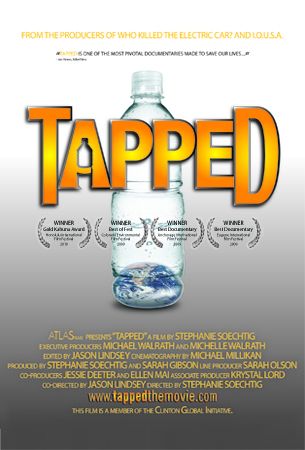 The Bucknell University Environmental Center is hosting a screening of "Tapped," a 2009 documentary film directed by Stephanie Soechtig on Tuesday, Oct. 4 at 7 p.m. The film will show at the Campus Theatre on 413 Market St., Lewisburg
Tickets are $2 and the show is open to the public.
Consider the following:
Giant masses of plastic particles swirling in the ocean.
Human health impairment in towns where PET plastics are manufactured.
Chemicals leaching from plastic packaging into drinking water.
What do these things have in common? They are some of the surprising and far-reaching impacts of the bottled water industry exposed in Stephanie Soechtig's debut feature film, Tapped. Per year, Americans pay a huge premium to consume over 8 billion gallons of bottled water, yet few consider where each bottle comes from and where it ends up. The film also probes topics like the petroleum used to make plastics and transport bottled products long distances, excessive groundwater withdrawals by bottling plants, and the general lack of regulatory oversight over the bottled water industry. Who profits and who loses out when society prioritizes convenience over sustainability? Watch this documentary and find out what's really in your bottle.
You are invited to stay for a post-screening discussion and Q & A session about bottled water and its impacts here in Pennsylvania. The discussion will be moderated by Cathy Curran Myers, Director of the BUEC and former Deputy Secretary for Water Management at the Pennsylvania Department of Environmental Protection. Sustainability Now's Peter Buckland will be a panelist discussing his recent experiences advocating for reduced bottled water use on the Penn State University Park campus.
Please note the BUEC's "Green Screens" sustainability series continues Nov. 8 Manufactured Landscapes and Nov. 29 Consuming Kids.
This event is co-sponsored by the Bucknell Environmental Club, the Bucknell Environmental Studies Program, and the Bucknell Department of Geography. "Tapped" is presented in partnership with the Bucknell Film/Media Studies Film Series (http://www.bucknell.edu/x71259.xml). For more information, visit www.campustheatre.org or email Wendy Chou (wc013@bucknell.edu).
23.9.11
Does ozone create the no zone?
On today's show, we will discuss air quality in the United States and in Pennsylvania.
A lot of the United States lives with a lot of smog a lot of the time. That puts a lot of people - especially children and elderly Americans - at risk for health problems like asthma and other respiratory illness. That's the gist of a new report Danger in the Air, released on Wednesday, from PennEnvironment.
The report tells us that some of our large and mid-size cities have pretty awful air from smog. Not surprisingly, cities like Los Angeles, Philadelphia, and Houston have bad air a lot more often than they should. But even idyllic places like State College, PA have higher levels of ambient air pollution more often than we might suspect.
The report takes aim at the Obama administration for its recent decision not to tackle ozone standards. As Charlie Dorsaneo of PennEnvironment said, "They chose to kick the can down the road until 2013." PennEnvironment recommends policy makers take positive action to alert the public with a stricter standard, to reduce air pollution through tighter regulation on emissions sources like cars, trucks, industry, and power plants, and finally to invest in renewable and less wasteful energy sources like solar and wind.
On that last note, you might be interested to see that even in the wake of the Solyndra controversy, that Republican Congressman Joe Barton agrees:
Sustainability Now's Peter Buckland joined State College Mayor Elizabeth Goreham, Sierra Club Moshannon's Gary Thornbloom, and PennEnvironment's Charlie Dorsaneo at the State College press conference on the report. Buckland;'s remarks are included here:
Listen in today from 4-4:30 pm on The Lion 90.7. Call in at (814) 865-9577.
A lot of the United States lives with a lot of smog a lot of the time. That puts a lot of people - especially children and elderly Americans - at risk for health problems like asthma and other respiratory illness. That's the gist of a new report Danger in the Air, released on Wednesday, from PennEnvironment.
The report tells us that some of our large and mid-size cities have pretty awful air from smog. Not surprisingly, cities like Los Angeles, Philadelphia, and Houston have bad air a lot more often than they should. But even idyllic places like State College, PA have higher levels of ambient air pollution more often than we might suspect.
The report takes aim at the Obama administration for its recent decision not to tackle ozone standards. As Charlie Dorsaneo of PennEnvironment said, "They chose to kick the can down the road until 2013." PennEnvironment recommends policy makers take positive action to alert the public with a stricter standard, to reduce air pollution through tighter regulation on emissions sources like cars, trucks, industry, and power plants, and finally to invest in renewable and less wasteful energy sources like solar and wind.
On that last note, you might be interested to see that even in the wake of the Solyndra controversy, that Republican Congressman Joe Barton agrees:
Sustainability Now's Peter Buckland joined State College Mayor Elizabeth Goreham, Sierra Club Moshannon's Gary Thornbloom, and PennEnvironment's Charlie Dorsaneo at the State College press conference on the report. Buckland;'s remarks are included here:
I don’t know if anyone here knows, but this week is No Impact Week. It’s a funky approach to reduce our individual and collective negative impacts and increase our positive impacts. I think those are just plain good things to do.
PennEnvironment’s report today shows us some challenges we face from our society’s and our economy’s impacts. This is about us.
Every year, thousands of people get sick from ambient air pollution. Every high-risk ozone day brings thousands of asthma attacks. It harms elderly people and young children disproportionately. 92% of ozone comes from fossil fuels and the lion’s share from transportation and industry. We in central Pennsylvania live downwind from coal plants and industrial hubs to our southwest. The pollution they pour into the air hurts us. It illustrates how we all live downstream, or downwind in this case.
Now I don’t know about you, but I love being outside. For years I have been riding mountain bikes like they are going out of style. I quit smoking and have since ridden my bike more than most people think sane. It’s fun. It’s also healthy. My wife rides. I have ridden with hundreds or thousands of people across this lush and verdant state. Just about every day, my wife and I play outside with our four-year-old son. We play baseball. A lot. He and the other kids on Chestnut Street run around constantly. Riding, running, and playing should to be healthy.
But what the Danger in the Air Report shows us, and I am not being an alarmist, is that I might actually get sick from exercising. Moderate to intense exercise for a few hours puts people at higher risk of respiratory dysfunction on high pollution days. As we’ve just heard, the alerts are lower thresholds than they should be according to the Clean Air Scientific Advisory Committee. In places like Philly and Houston, you’re talking about regular health threats to people doing the right thing. I quit smoking for a reason.
Governor Corbett says Pennsylvania has the opportunity to be the next Texas because of the Marcellus and Utica shale natural gas booms. Take note of Pennsylvania’s air quality now. It’s not so different from Texas’. Philly is just a bit worse than Houston but Fort Worth is just a little worse than Pittsburgh. Now add tens of thousands of wells, compressor stations, pipelines, and the trucks to service it all and let’s talk about Pennsylvania air quality. As a bike racer I like to rank high. But this is no race for Pennsylvania to win. I say “No thank you” Mr. Corbett. So should you.
We need real action for health. Regulations are structured for polluters’ exorbitant profits. They say they fuel progress. More asthma and chronic breathing conditions – in humans or otherwise – is not progress. Progress is not pollution.
Health and happiness are progress. Congress and the President must act. We must also call our power companies to initiate switches from toxic power to less wasteful and renewable energy.
It can’t stop with phone calls, policies, and techno-fixes. Just like healthy diets and exercise, live to reduce pollution. Don’t go for no impact. Go for better impacts. Today, eat lower on the food chain. Tomorrow carpool, ride the bus, or ride a bike. Next week, figure out ways to throw away less stuff. Trash here travels 75 miles to Somerset county in 4 mpg trucks. Next month, get an energy audit and work your way toward a high efficiency low impact house.
Those impacts aren’t no impacts. They are much better impacts. That’s progress. It’s work. Let’s work together.
Listen in today from 4-4:30 pm on The Lion 90.7. Call in at (814) 865-9577.
9.9.11
Today's show: Groundswell and Outrage [Updated]
Today at 4 pm, we'll be airing our first show of the fall season. It will be as fresh and local as we can make it.
Braden Crooks, founder of Groundswell will be on to discuss the what and the why of an Environmental Bill of Rights and a ban on hydraulic fracturing proposed for popular vote in State College, Pennsylvania. [For more see last week's blog post.] What rights does the other-than-human environment deserve? What are our responsibilities to it? What are our responsibilities to future generations of people and their living places and the organisms and systems that will support them? It's no small thing to wrap your head around.

After the 4:30 break we'll be joined by Iris Marie Bloom of Protecting Our Waters. She is one of the principle organizers of Shale Gas Outrage rally and demonstration and the Freedom From Fracking conference this Wednesday, September 7th in Philadelphia. They write,
Sustainability Now's Peter Buckland was at the demonstration on Wednesday [read here], doing interviews and getting the inside scoop. People from across the commonwealth were there demanding change, all while being called liars or hysterical by the gas industry.
Perhaps Groundswell's Environmental Bill of Rights is the wave of the future for communities seeking some respite from natural resource extraction, habitat fragmentation, and pollution. Bolivia, following in the footsteps of Ecuador, is set to pass a historic Law of Mother Earth that would grant other-than-human nature equal rights. Is State College next?
Listen this Friday from 4-5 pm on The Lion 90.7 fm. Feel free to call in at 865-9577.
---
Here is a copy of the Environmental Bill of Rights itself.
Braden Crooks, founder of Groundswell will be on to discuss the what and the why of an Environmental Bill of Rights and a ban on hydraulic fracturing proposed for popular vote in State College, Pennsylvania. [For more see last week's blog post.] What rights does the other-than-human environment deserve? What are our responsibilities to it? What are our responsibilities to future generations of people and their living places and the organisms and systems that will support them? It's no small thing to wrap your head around.

After the 4:30 break we'll be joined by Iris Marie Bloom of Protecting Our Waters. She is one of the principle organizers of Shale Gas Outrage rally and demonstration and the Freedom From Fracking conference this Wednesday, September 7th in Philadelphia. They write,
This demonstration is in response to the Marcellus Shale Coalition’s conference in Philadelphia on Sept. 7th and 8th. CEOs from major fracking companies will be plotting to expand their poisonous operations in PA, NY, OH, MD, WV, VA, and NJ. Pennsylvania Governor Tom Corbett and former governors Tom Ridge and Ed Rendell will be speaking in support of the industry. Dubbed “Shale Gas Insight,” this is not only a key trade show for the industry, but also a brazen expression of its political muscle.Today, Bloom will give us the rundown about what we can expect next in the continued wrangling over the natural gas rush in Pennsylvania.
Sustainability Now's Peter Buckland was at the demonstration on Wednesday [read here], doing interviews and getting the inside scoop. People from across the commonwealth were there demanding change, all while being called liars or hysterical by the gas industry.
Perhaps Groundswell's Environmental Bill of Rights is the wave of the future for communities seeking some respite from natural resource extraction, habitat fragmentation, and pollution. Bolivia, following in the footsteps of Ecuador, is set to pass a historic Law of Mother Earth that would grant other-than-human nature equal rights. Is State College next?
Listen this Friday from 4-5 pm on The Lion 90.7 fm. Feel free to call in at 865-9577.
---
Here is a copy of the Environmental Bill of Rights itself.

29.8.11
Ban? Moratorium? Acceleration? Just get informed and get involved.

How is your community handling natural gas development? What would you like to do about it?
It seems that the conversation in the halls of government in Pennsylvania has been controlled by gas industries and those who profit from natural gas development. Where has the community voice been in the scale and pace of this "boom"?
Whether you want a ban, a moratorium, more drilling, or aren't sure what ought to be done, it might be a good idea to get involved and deliberate with your fellow citizens. Events like this one in Williamsport might be your ticket to understanding the current conditions and acting responsibly in your community and with other communities.
This is a democracy right? Then be a citizen and get involved.
5.8.11
Corporate censorship
 According to a newletter sent out to environmental groups today this billboard was taken down. It was paid for by the Sautner family of Dimock, Pennsylvania who have had their water contaminated by gas drilling operations, a contention fully supported by a Pennsylvania Department of Environmental Protection investigation. You can watch some coverage before it was torn down here at News Channel 34 or read more about the clash over the billboard at The Citizen's Voice.
7.6.11
Fracktivism reaches new pitch at state Capitol
 Capitol lobbying day in Harrisburg culminated for many in an anti-drilling protest.
Groups such as Clean Water Action, Sierra Club, Gas Truth, and Marcellus Protest convened on the steps of the rotunda with several hundred protesters to speak out against shale gas drilling in Pennsylvania.
Many of those attending lobbying day met with their legislators to discuss budget issues. Members of public sector unions came out to lobby for their slice of the pie. But by far, the biggest spectacle came when citizens and activist organizations started up just before noon.
Nathan Sooy of Clean Water Action and Gas Truth pitched up the crowd with chants. By noon the rotunda steps were lined with citizens. Unlike many of the talking points circulated by some groups and moderates, many of those who spoke today oppose drilling all together. For them, a moratorium is only the beginning.
 Craig Sautner of Dimock, PA held up a jug of water contaminated by Cabot Oil and Gas operations. He cited the moratorium for nine square miles around his house and said, "[Gas companies] should be banned from the state of Pennsylvania for good." He received loud applause. He and others hope to move the conversation from a severance tax or drilling fee, as some legislators have proposed, to a ban.
Some speakers, including Crystal Stroud whose drinking water contains dangerous levels chemicals like gross-alpha, strontium, and others, cited the Pennsylvania Constitution:
"The people have a right to clean air, pure water, and to the preservation of the natural, scenic, historic and esthetic values of the environment. Pennsylvania's public natural resources are the common property of all the people, including generations yet to come. As trustee of these resources, the Commonwealth shall conserve and maintain them for the benefit of all the people."But the conversation is the important part as Nathan Sooy makes clear in this brief interview:
Article 1 Section 27 of the Pennsylvania Constitution
After the rally, citizens were joined by Gasland director Josh Fox who joined other citizens in a sit-in outside of the governor's office. They were unable to meet with the governor.
You can read about the day's events at PennLive, WITF, and the Pittsburgh Post-Gazette.
11.5.11
Dr. Ingraffea interview on WPSU
Emily Reddy of WPSU interviewed Dr. Anthony Ingraffea yesterday in light of his presentation on Shale gas myths and realities. You can listen to it here.
He discusses frack water recycling and whether or not natural gas is really less problematic for climate change. In short, methane (CH4) is a is about 33 times more intense greenhouse gas than CO2 over 100 years and over 100 times over a 20 year period. So much methane (CH4) seems to be lost to the atmosphere in the extraction, production, and transport of natural gas that it might produce more climate forcing than CO2. That runs counter to the notion that natural gas is a "cleaner" fuel. You can learn more about Ingraffea's findings in peer-reviewed literature by reading his most recent research article at this link.
Additionally, as a university person and a believer in the role of public and free education, I was pleased to hear Reddy ask him about university's role in these issues.
What myths and realities do you wonder about regarding shale gas?
4.5.11
Pennsylvania gets double whammy on gas drilling
First, the public gives DEP a black eye. Then a neighboring state is taking us to court.
Pennsylvania's Department of Environmental Protection has stepped back from its policy regarding on-site violation. On March 23rd, an internal memo was leaked to the press directing all DEP inspectors to run potential violations by DEP Secretary Michael Krancer. There was an immediate outcry from citizens and local, regional, and environmental organizations. It looks as though that may have played some part in the policy's reversal.
According to the Philadelphia Inquirer, DEP is saying that Krancer's intent was not clearly stated. Some, like Sierra Club's Jeff Schmidt aren't buying it. The article quotes Schmidt as saying, "I think they never intended for it to be public, therefore they never planned to deal with it if it became public. Now they're coming up with one story after another to change history." Activists in the blogosphere, on Facebook, and Twitter seem to agree. And history now has the recent well blowout in Bradford County.
That threat to public health and the environment have prompted Maryland's attorney general to sue Chesapeake Energy. The attorney general's statement begins as follows:
There are now a few high-profile lawsuits in the work. Do you think Maryland is in the right on this?
Pennsylvania's Department of Environmental Protection has stepped back from its policy regarding on-site violation. On March 23rd, an internal memo was leaked to the press directing all DEP inspectors to run potential violations by DEP Secretary Michael Krancer. There was an immediate outcry from citizens and local, regional, and environmental organizations. It looks as though that may have played some part in the policy's reversal.
According to the Philadelphia Inquirer, DEP is saying that Krancer's intent was not clearly stated. Some, like Sierra Club's Jeff Schmidt aren't buying it. The article quotes Schmidt as saying, "I think they never intended for it to be public, therefore they never planned to deal with it if it became public. Now they're coming up with one story after another to change history." Activists in the blogosphere, on Facebook, and Twitter seem to agree. And history now has the recent well blowout in Bradford County.
That threat to public health and the environment have prompted Maryland's attorney general to sue Chesapeake Energy. The attorney general's statement begins as follows:
BALTIMORE, MD ( May 2, 2011) - Attorney General Douglas F. Gansler today announced that he has sent a letter to Chesapeake Energy Corporation and its affiliates, notifying the companies of the State of Maryland's intent to sue for violating the federal Resource Conservation and Recovery Act (RCRA) and the Clean Water Act (CWA). On April 19, thousands of gallons of fracking fluids were released from a well owned and operated by Chesapeake Energy into Towanda Creek, a tributary of the Susquehanna River, which supplies 45% of the fresh water in the Chesapeake Bay. In his letter, Attorney General Gansler notified the company that at the close of the required 90-day notice period, the State intends to file a citizen suit and seek injunctive relief and civil penalties under RCRA for solid or hazardous waste contamination of soils and ground waters, and the surface waters and sediments of Towanda Creek and the Susquehanna River. The State also intends to seek injunctive relief and civil penalties under the CWA for violation of the CWA's prohibition on unpermitted pollution to waters of the United States.You can read more about the suit at The Baltimore Sun.
There are now a few high-profile lawsuits in the work. Do you think Maryland is in the right on this?
Subscribe to:
Posts (Atom)